
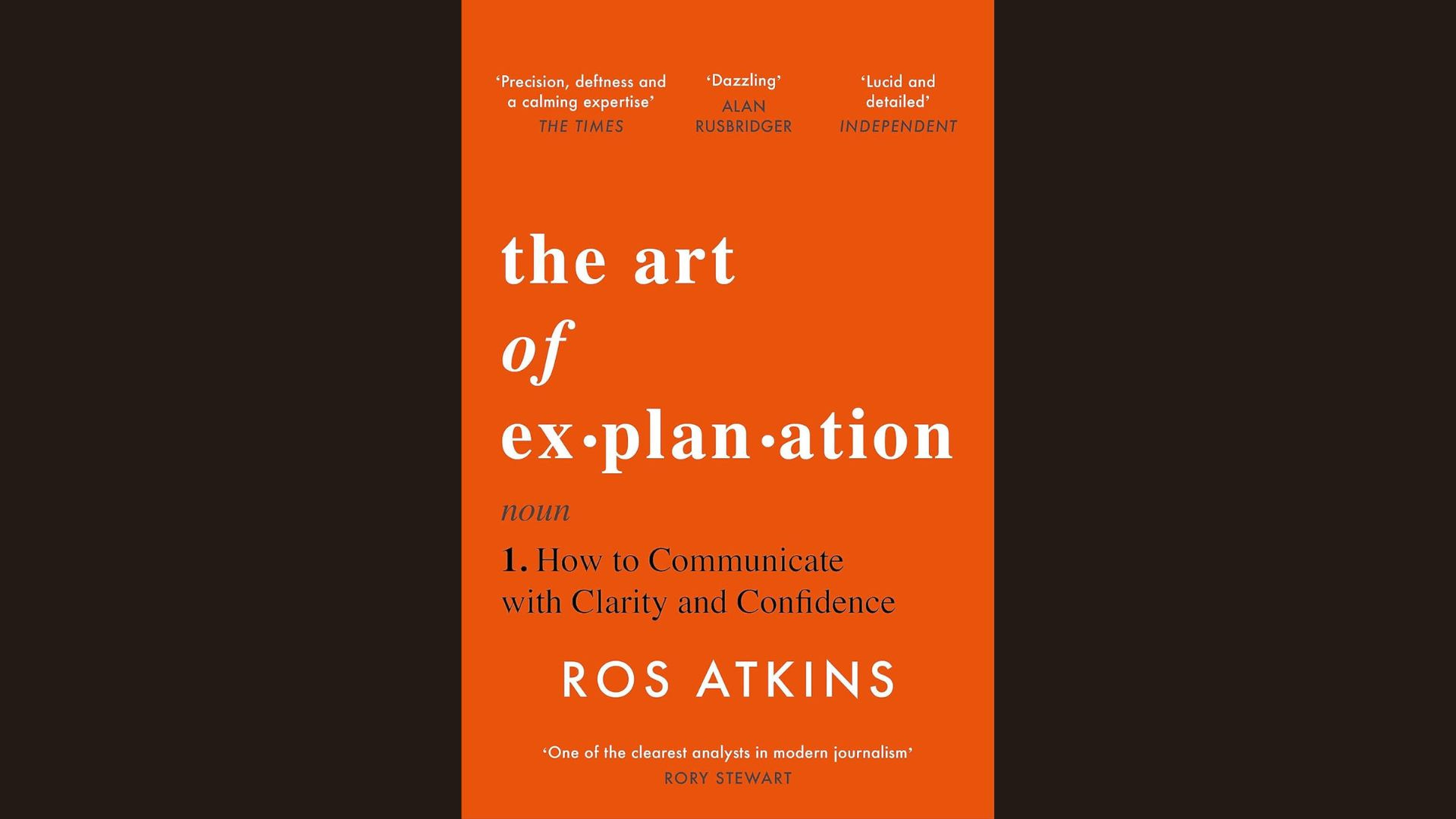
📣 Curious Quotes from the Author
“Explanation is a potent mix of clarity of purpose, clarity of language and essential information – all calibrated for an intended audience. Those who do it well stand out.”
“In the same way that you can’t run a business as well as possible without understanding your target market, you can’t explain yourself as well as you’d like if you’ve not considered who your explanation is for.”
“If we can better understand what our audience knows and wants, we can better judge what information is most relevant and helpful to them, with all the benefits that come with that.”
“There is a direct connection between how well you communicate to an audience that this is for them and their level of engagement.”
“Whether it’s a one-off, like a job interview, or something long-term, such as an idea or product or business you’re trying to get going – ask yourself: where’s the credibility gap? Then you can work up ways to address that.”
“As history teaches us, narrative can be used for the worst and the best of reasons. What is beyond doubt is the potency of stories. Tell a good one and people will hang on your every word. If you’re a brand, shape a narrative (and even better an origin story) about your business or your products and it can be incredibly powerful in making people feel favourably towards you.”
“Before you start to write and when you think you’ve finished, take a few seconds to ask yourself: ‘What’s this story in five words?’ Have you conveyed that?”
“The best written and verbal explanations have a rhythm, a personality and a fluidity that complement the precision and relevance of the information they are passing on.”
“The difficulty level of talking from memory reduces sharply with a visual presentation to accompany you. In many cases, the slides (or any other visual support you’re using) can act as a prompt which makes being completely without notes much easier. They act almost as a replacement for the bullet points that you might have had.”
📚 Cognition of the Book’s Big Idea
There are just five easy steps to master the art of explanation, and they all combine to make sure your message is understood. You must first comprehend the components of a strong explanation. This entails methodically expressing your thoughts, organizing them effectively, and making sure each section of your explanation has a purpose. To make your explanation pertinent and interesting, you must next recognize and comprehend your audience and then modify your message to fit their requirements, interests, and level of understanding.
The seven steps of explanation follow after this foundation has been established. These techniques help you create a message that is compelling, clear, and succinct. Fourth, though, it's important to modify your explanation to fit changing circumstances because explanations aren't always given in predictable contexts. Sometimes it makes all the difference to be adaptable and prepared to change your message at any time. Lastly, you should communicate your message more quickly.
You can make your explanations easily understood, even in the heat of the moment, by developing your ability to express complicated ideas quickly and efficiently. Gaining proficiency in these elements will enable you to communicate your thoughts in a way that genuinely engages others, whether in a classroom, boardroom, or other context.
Until Tomorrow,
Jason (Founder Club255)